How Painkillers Work: NSAIDs, Opioids and More
Painkillers reduce pain through different biological mechanisms. Nonsteroidal anti-inflammatory drugs (NSAIDs), such as ibuprofen, inhibit cyclooxygenase enzymes and lower production of prostaglandins involved in pain and inflammation. Opioids activate receptors in the nervous system that reduce pain transmission and alter pain perception. Acetaminophen relieves pain and fever, but its exact mechanism is not fully established. Therefore, the familiar image of a tablet simply “blocking a pain wire” is a useful metaphor, not a literal description of every analgesic. This guide explains the science and essential safety distinctions.
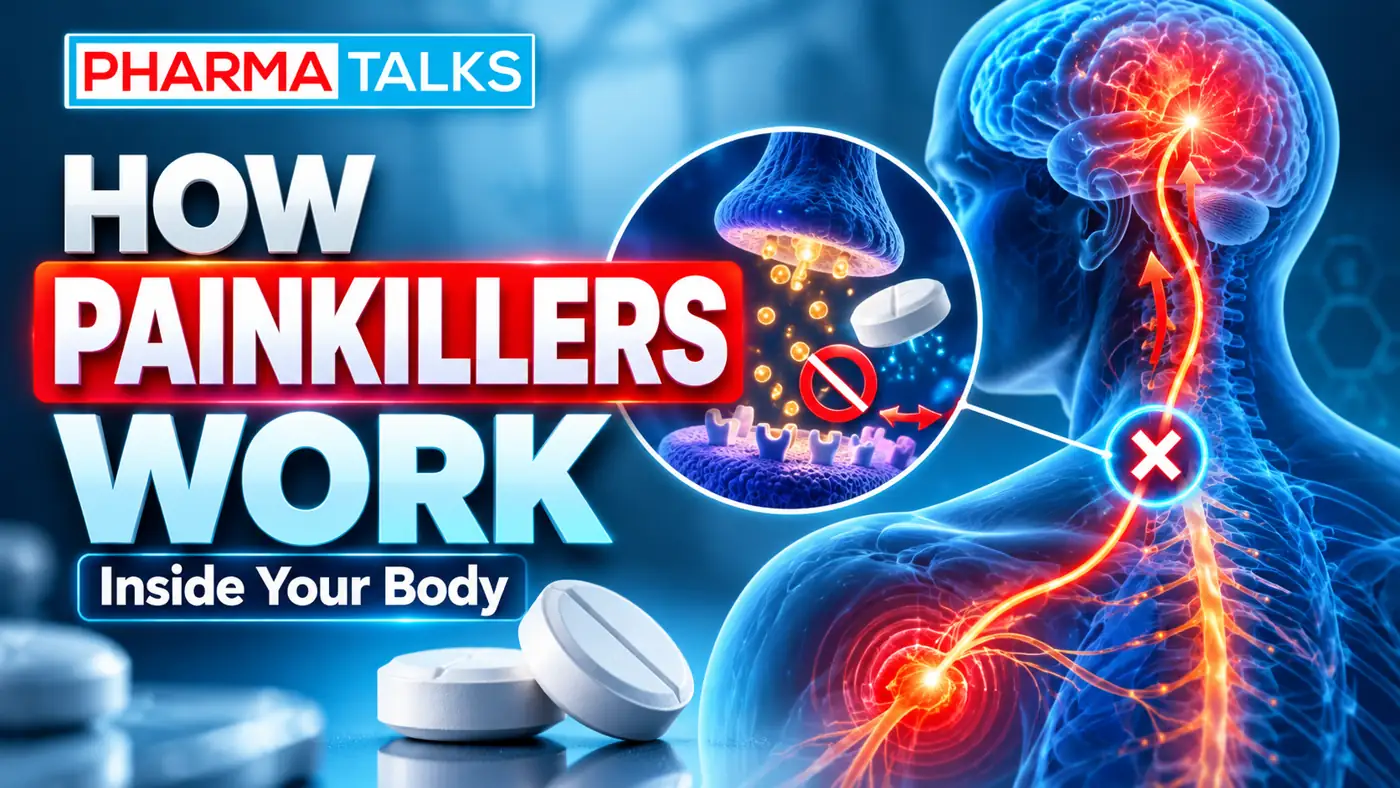
How Do Pain Signals Travel?
Nociceptors are sensory nerve endings that respond to potentially harmful mechanical, thermal or chemical stimuli. Their activity is transmitted through peripheral nerves toward the spinal cord, where neural processing modulates how much information travels toward the brain. Brain networks integrate the signal with attention, emotion and prior experience to create the conscious experience of pain. Inflammation may increase nociceptor sensitivity through chemical mediators, including prostaglandins. Reducing pain can mean reducing inflammatory sensitization, changing spinal transmission or changing how the brain processes nociception.
NSAIDs: COX Enzymes and Prostaglandins
NSAIDs primarily inhibit cyclooxygenase (COX) enzymes, reducing synthesis of prostaglandins and related mediators. COX-1 participates in normal physiological processes including gastrointestinal protection and platelet function; COX-2 is often induced in inflammatory contexts but also has normal roles. Ibuprofen and naproxen are examples of commonly used NSAIDs. Their analgesic effects can be valuable when inflammation contributes to symptoms. However, enzyme inhibition also helps explain possible gastrointestinal bleeding, kidney dysfunction and cardiovascular concerns; risk varies by substance, patient and exposure.
Classes and Mechanisms
| Class | Mechanism summary | Example | Characteristic risk |
|---|---|---|---|
| NSAIDs | COX inhibition; lower prostaglandin production | Ibuprofen; naproxen | GI, renal and cardiovascular risks |
| Acetaminophen | Central analgesic mechanisms not completely established | Paracetamol | Liver injury with overdose |
| Opioids | Opioid receptor activation in neural pathways | Morphine | Respiratory depression, dependence |
| Other pain therapies | Context-specific neural targets | Condition-specific medicines | Varies by substance |
Acetaminophen: Pain and Fever Without Strong Peripheral Anti-Inflammation
Acetaminophen, also called paracetamol, is used for pain and fever. Unlike traditional NSAIDs, it generally has little peripheral anti-inflammatory effect. Its precise analgesic mechanism remains under study: central prostaglandin-related processes and other neural pathways have been proposed. The major practical safety issue is hepatotoxicity when total exposure exceeds recommended amounts, including when multiple combination products contain acetaminophen.
Opioids: Receptor-Mediated Pain Modulation
Opioids, including morphine and certain prescription medicines, bind opioid receptors in the brain, spinal cord and other tissues. Receptor activation can reduce neurotransmission in pain pathways and lessen conscious pain perception. Opioid receptors also influence breathing and reward circuits, helping explain the risks of respiratory depression, dependence and overdose. They require careful selection, monitoring and prescription oversight.
Pathway and Evaluation Parameters
| Stage | Biological or clinical parameter | Measurement or observation | Limitation |
|---|---|---|---|
| Stimulus | Tissue injury and mediators | Symptom and exam | Pain is subjective |
| Peripheral transduction | Nociceptor sensitization | Research biomarkers | Not routine clinical pass/fail |
| Central processing | Spinal/brain modulation | Pain assessments | Context dependent |
| Drug exposure | Onset, duration and interactions | Clinical/pharmacokinetic data | Drug-specific |
| Safety | Renal, hepatic, respiratory considerations | History/labs/monitoring | Patient-specific |
Why Does One Painkiller Work Better Than Another?
A strained muscle with inflammatory symptoms, a postoperative wound and neuropathic pain may respond differently to the same analgesic. Additional factors include age, liver and kidney function, bleeding risk, other medicines, pregnancy considerations, patient goals and history of substance-use problems. Treatment choices should follow individualized clinical assessment rather than simplified potency rankings.
Safety Checkpoints and Clinical Evidence
The FDA warns that taking more acetaminophen than directed can cause severe liver injury; the correct safe amount depends on the label and individual situation. NSAID risk evaluation includes gastrointestinal ulceration or bleeding, renal effects and cardiovascular risk. Opioid safety evaluation includes sedation, respiration, interactions and dependence risk. This article does not recommend doses or specific products for an individual. Readers should use the approved labeling and seek professional help for persistent, worsening or unexplained pain.
Evidence and Safety Constraints
| Claim or criterion | Evidence-based position | Not a universal value | Reference |
|---|---|---|---|
| NSAID effect | COX inhibition reduces prostaglandins | Benefit and risks vary | NIH-NSAID |
| Acetaminophen mechanism | Exact mechanism remains uncertain | Do not claim single proven receptor | NIH-PAIN |
| Acetaminophen use | Do not exceed labeled dose; check combinations | No universal self-prescribing dose | FDA-ACET |
| Opioid activity | Opioid receptors alter transmission/perception | Respiratory monitoring depends on medicine | NIH-OPIOIDS |
| Pain relief success | Clinical response assessed individually | No GMP-style pain acceptance threshold | NLM-ANALGESIC |
Pharmaceutical Development and Documentation
Analgesic development connects pharmacodynamics with pharmacokinetics, quality, safety and effectiveness. Investigators characterize dose-response relationships, bioavailability, interactions and clinical outcomes. In manufacturing, specifications, stability, identity, content and dissolution may matter depending on the dosage form, while validated analytical methods and deviations are handled under applicable GMP systems. A suspected adverse drug reaction requires appropriate medical evaluation and pharmacovigilance reporting. Mechanism graphics should clearly separate established facts from hypotheses, particularly for acetaminophen.
Troubleshooting and CAPA
| Problem | Possible cause | Investigation | Corrective action | Preventive action |
|---|---|---|---|---|
| Insufficient relief | Wrong pain mechanism or dose timing | Review diagnosis and treatment plan | Clinical reassessment | Individualized follow-up |
| Duplicate acetaminophen | Multiple combination products | Medication reconciliation | Immediate safety assessment | Label and counseling checks |
| NSAID adverse event | Risk factor or interaction | Review medicine and clinical findings | Clinical management | Interaction screening |
| Opioid oversedation | Excess exposure or interactions | Assess respiration and drug history | Urgent protocol-based care | Prescribing and monitoring controls |
Frequently Asked Questions
Do painkillers block every pain signal?
No. Different classes reduce inflammatory sensitization, central neural transmission or conscious pain processing in different ways.
How does ibuprofen reduce pain?
It inhibits COX enzymes and lowers prostaglandin production involved in pain and inflammation.
Is acetaminophen an NSAID?
No. It is commonly treated as a separate analgesic and antipyretic with little peripheral anti-inflammatory effect.
Is acetaminophen’s mechanism fully known?
No. Several central pathways are under investigation and the precise mechanism is not completely established.
Why can opioids slow breathing?
Opioid receptors participate in respiratory-control pathways, creating a risk of respiratory depression.
Can over-the-counter painkillers cause serious harm?
Yes. Examples include liver injury from acetaminophen overdose and gastrointestinal or renal complications from NSAIDs.
Related Pharmatalks Resources
Explore the other verified educational pages in this downloadable Pharmatalks series. These are working links within the package, not claims of existing public website URLs.
Official and Reference Sources
- NIH-OPIOIDS NIH — Opioids: How Opioids Work — official health education
- NLM-ANALGESIC MedlinePlus — Pain Relievers — official health education
- FDA-ACET FDA — Acetaminophen Safety — official drug-safety guidance
- NIH-NSAID NLM — Nonsteroidal Anti-Inflammatory Drugs — clinical reference
- NIH-PAIN NLM — Pain Management Medications — clinical reference
Reviewed by Pharmatalks editorial research workflow; no individual clinical sign-off is represented. Medical guidance and product labels may change. Source access checked during drafting on 6 November 2026.
Conclusion
Pain relief is a product of pharmacology and neural processing, not one universal signal switch. NSAIDs, acetaminophen and opioids have distinct mechanisms and risks, making evidence-based medicine selection essential.
Author / educational publisher: Pharmatalks · Editorial review date: 2026-11-06